
Search D&D Hardware Products

Commercial Door Locks are manufactured through controlled stages including material selection, precision machining, forming, surface treatment, assembly, testing, and final inspection to achieve consistent performance.
Commercial door lock manufacturing is more than assembling a lock body and handle. A typical production process connects material selection, component manufacturing, surface finishing, precision assembly, functional testing, and final inspection.
The exact process varies according to the lock type. A mortise lock, cylindrical lock, Door Handle Lock, or Panic Hardware product may require different components and production methods.
For commercial hardware, the important point is consistency. Every batch needs to reproduce the approved dimensions, materials, finish, mechanical function, and performance requirements.
A typical manufacturing workflow looks like this:
Product Design → Material Preparation → Component Machining → Surface Treatment → Assembly → Performance Testing → Final Inspection → Packaging
Each stage can affect the reliability of the finished door lock.
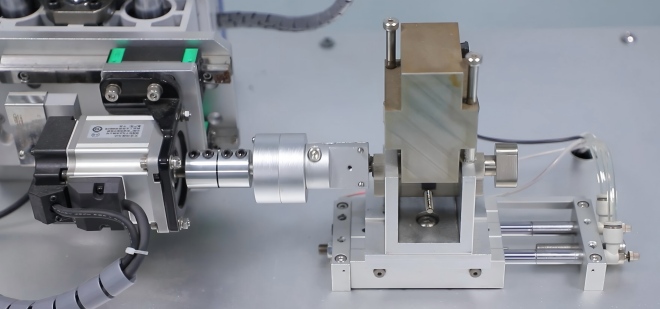
Manufacturing begins before the first metal component is produced.
Engineers define dimensions, door thickness, backset, lockcase structure, latch or deadbolt specifications, cylinder configuration, mounting method, finish, and application requirements.
For customized commercial hardware, the design stage may also involve:
Non-standard door dimensions
Special functions
Customized materials
Surface finishes
Brand logos
Packaging requirements
Fire-rated or certified configurations
Technical drawings are particularly important when a lock needs to fit an existing door preparation. D&D provides CAD/BIM drawings, hardware schedules, and application guidance as part of its engineering support.
This step helps prevent a common manufacturing problem: producing a mechanically functional lock that does not match the actual door specification.
Material selection depends on the component and the environment where the lock will be installed.
Common materials include:
Stainless steel
Brass
Zinc alloy
Steel
Galvanized steel
For example, D&D's commercial mortise lock models use heavy-gauge stainless steel lockcases, SUS304 deadbolts and latchbolts, and Grade 304 stainless steel for forends and strikes. Some other products use solid brass or zinc alloy components according to their design requirements.
The material cannot be evaluated separately from the application.
A lock installed in a humid or coastal environment may require stronger corrosion resistance, while a high-traffic commercial door may place greater demands on mechanical strength and wear resistance.
Once materials are prepared, individual components are processed according to engineering drawings.
Depending on the product, manufacturing may involve:
Cutting
Stamping
Drilling
Tapping
Turning
Casting
Forming
Precision machining
The purpose is not simply to create the correct shape. Critical dimensions must remain within the required tolerances so that components fit together correctly during assembly.
A small dimensional difference in a latch, follower, spindle, cylinder, or lockcase can affect handle movement, alignment, installation, and long-term operation.
D&D's manufacturing system includes advanced production equipment and automated drilling and tapping machinery, supporting standardized production and dimensional consistency across batches.
Surface treatment provides both appearance and functional protection.
Commercial door hardware may be supplied in finishes such as:
Satin stainless steel
Polished stainless steel
Polished brass
Antique brass
Antique copper
Matte black
PVD finishes
The selected finish needs to match the product material, application environment, design requirements, and project specification.
Surface treatment also needs to remain consistent across related hardware. When a project includes locks, handles, cylinders, door closers, and other accessories, visible differences in color or gloss can become noticeable after installation.
For this reason, finish inspection is an important part of commercial hardware quality control rather than simply a cosmetic step.
After machining and surface treatment, the individual components are assembled into the finished lock.
For a mortise lock, assembly may involve the lockcase, latchbolt, deadbolt, follower, springs, spindle mechanism, cylinder components, forend, strike, and other internal parts.
Assembly accuracy affects:
Handle operation
Latch movement
Deadbolt engagement
Key operation
Door alignment
Overall durability
The same principle applies to cylindrical locks and other commercial hardware: components need to work together within their designed tolerances.
A professional manufacturer therefore controls assembly procedures rather than relying only on final visual inspection.
Testing verifies whether the assembled product performs according to its intended specification.
Depending on the product and certification requirements, quality control may include:
Dimensional inspection
Appearance inspection
Functional testing
Mechanical operation testing
Durability testing
Surface inspection
Corrosion-related testing
Safety and performance verification
Certified products require particular attention because the mass-produced configuration needs to remain consistent with the applicable certified design.
D&D states that its quality system includes incoming material inspection and traceability, in-process quality control at critical stages, and final testing for performance, durability, and safety.
A commercial door lock manufacturer may produce hundreds or thousands of units for one project. The buyer therefore needs consistency across the entire order, not simply one well-made sample.
Batch consistency involves controlling:
Material → Dimensions → Machining → Finish → Assembly → Testing
If any link changes significantly, the final product may behave differently from the approved sample.
This is particularly important for OEM projects, where the buyer may use the same lock specification across multiple buildings or future orders.
D&D operates an ISO 9001-certified quality management system and describes more than 10 controlled processes for quality consistency. Its manufacturing system is designed to support stable batch production for long-term and project-based orders.
After inspection, qualified products are packaged according to the agreed project requirements.
Commercial door hardware packaging may need to protect the finish and prevent component damage during transportation. Packaging can also include customized labels, color boxes, instruction materials, hardware identification, or brand information for OEM orders.
For project supply, packaging is part of logistics control because hardware may be shipped internationally and distributed across multiple installation locations.
D&D supports OEM/ODM customization covering product specifications, materials, finishes, functional requirements, logo engraving, and packaging.
Manufacturing experience becomes valuable when the factory encounters different door types, project specifications, certification requirements, and customization requests.
D&D has more than 18 years of architectural hardware manufacturing experience and supplies hardware for metal doors, wooden doors, and fire-rated doors. Its product range includes door locks, door handle locks, cylinders, panic hardware, padlocks, Rim Locks, and smart locks.
The company also reports experience supporting more than 5,000 construction projects globally, covering applications such as hotels, healthcare facilities, educational buildings, offices, and specialized buildings.
This project experience helps connect product manufacturing with actual installation requirements instead of treating each lock as an isolated component.
The difference becomes most visible when a product requires modification or when problems occur during production.
A trading company may coordinate an order between different suppliers. A manufacturing partner can directly participate in engineering, material selection, production control, inspection, sampling, and technical problem-solving.
For OEM and project orders, this can affect:
Response time during specification changes
Sample development
Production consistency
Quality issue analysis
Finish matching
Technical documentation
Delivery coordination
D&D describes an integrated manufacturing system supported by production and engineering teams, together with OEM/ODM capabilities and project-based technical support.
Before placing an order, buyers should look beyond the product catalog and ask how the factory actually controls production.
Useful questions include:
What materials are used for critical components?
Which dimensions are controlled during machining?
How is surface finish consistency checked?
What inspections occur before assembly?
How are finished locks functionally tested?
Does the factory support the required certification?
Can the approved sample be reproduced consistently?
Can the manufacturer provide technical drawings and hardware schedules?
How are customized specifications controlled during mass production?
What quality records are available for project orders?
These questions reveal much more about manufacturing capability than a factory photo or product catalog alone.
The final performance of a commercial door lock is the result of multiple controlled stages rather than one single production step.
Poor material selection can affect strength or corrosion resistance. Inaccurate machining can create installation or operating problems. Inconsistent surface treatment can reduce appearance quality. Incorrect assembly can affect the latch, deadbolt, cylinder, or handle mechanism.
For certified commercial hardware, these risks become even more important because the supplied product needs to match the specified and tested configuration.
A reliable manufacturing process therefore connects engineering, production, quality control, certification, and project requirements into one system.
For commercial door hardware buyers, understanding this process provides a more practical way to evaluate a manufacturer: not simply by asking whether the factory can make a lock, but whether it can repeatedly make the same qualified lock to the same specification at production scale.